10 Game Development Mistakes Indie Developers Should Avoid

Building a game is exciting, but the biggest challenges often appear after the first playable prototype. A game can have good graphics and interesting mechanics yet still fail because of poor controls, unclear progression, slow performance, or an overly complicated development process. For indie developers, avoiding common mistakes can save months of development time. Here … Read more
How to Build a Hyper-Casual Game in Unity: From Idea to Playable Prototype

Creating a game doesn’t always require a huge team, years of development, or hundreds of assets. A simple mechanic combined with responsive controls, satisfying feedback, and good presentation can become a fun mobile game. Unity is particularly well suited for experimenting with small game ideas because you can quickly prototype gameplay, test different mechanics, and … Read more

How I Built a Hyper-Casual Mobile Game Faster with UnityTools

Building a hyper-casual mobile game can look simple from the outside. The gameplay may involve only a few mechanics, simple controls, and short sessions, but building a production-ready mobile game requires much more than implementing the core mechanic. You also need to think about scene management, player data, UI, settings, advertisements, reusable scripts, animations, project … Read more

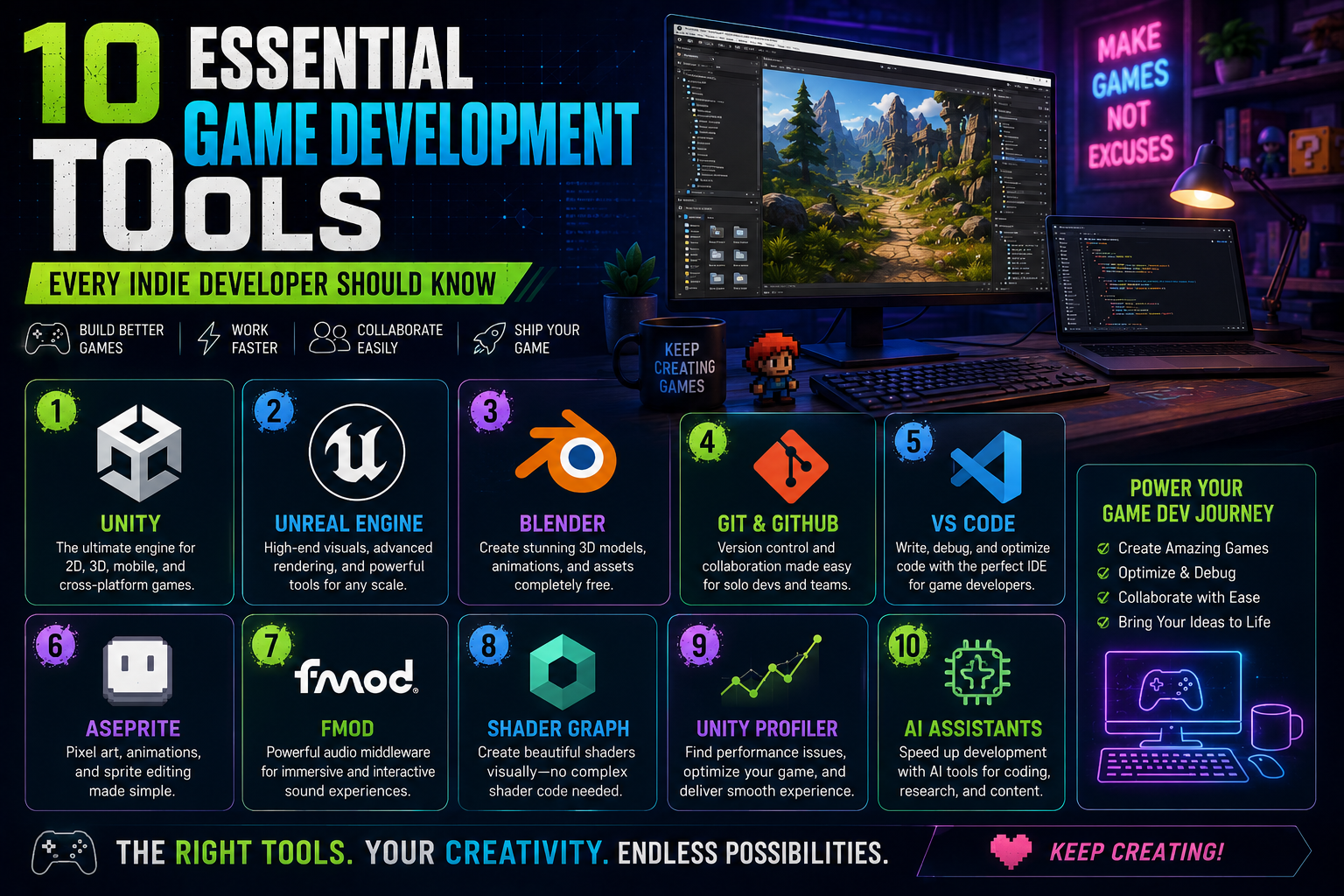
10 Essential Game Development Tools Every Indie Developer Should Know

From game engines and 3D modeling software to version control, audio tools, and performance profilers, discover 10 essential tools that can help indie developers build, test, optimize, and publish better games.

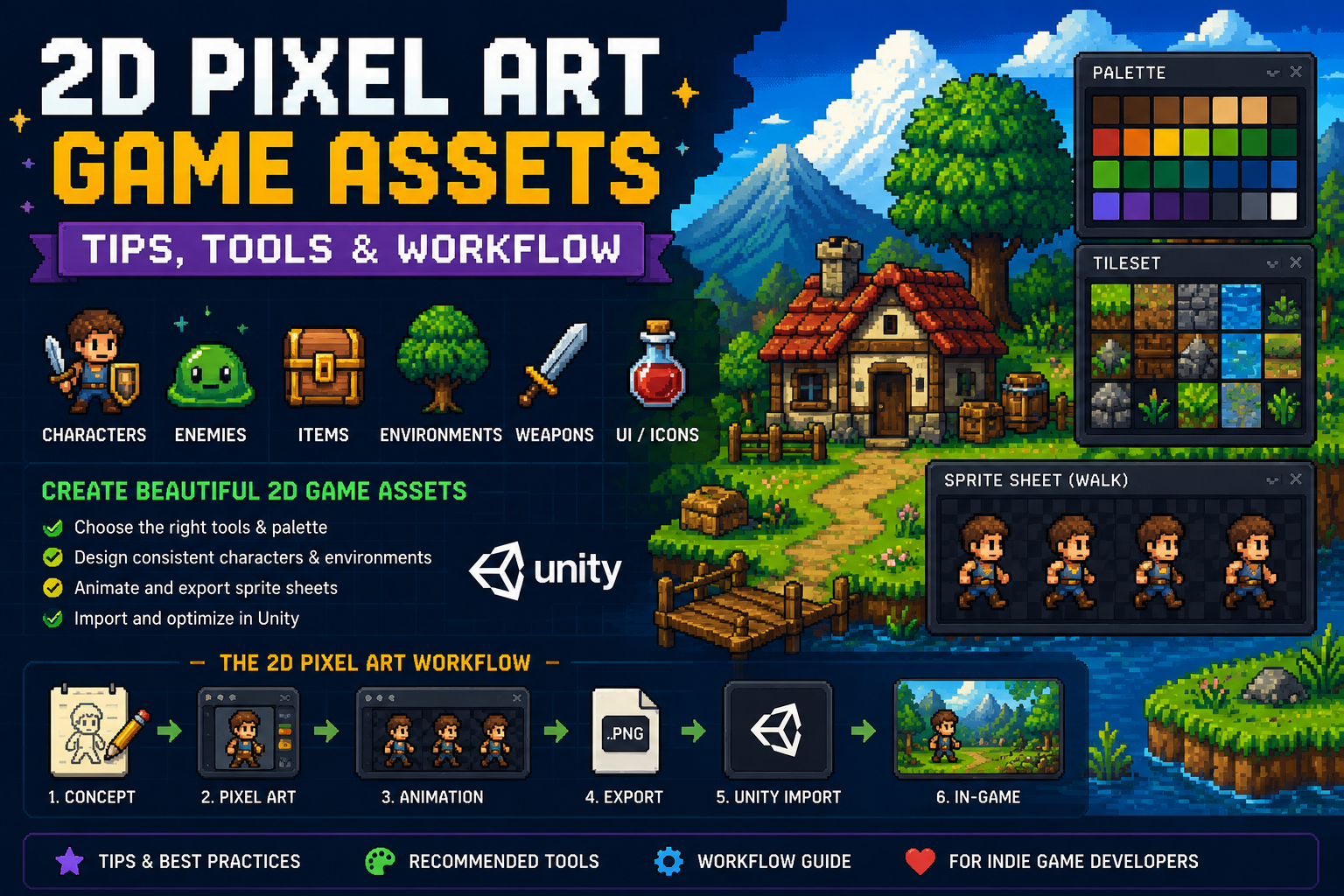
Mastering Pixel Art for Unity Games

Learn how to create polished 2D pixel art game assets for Unity. Discover the best tools, pixel resolutions, color palettes, animation techniques, tileset workflows, and Unity import settings for building consistent and professional-looking pixel art games.